
What an El Paso County Release Means
There is no single universal release record. For an adult EPCSO booking, the key event sits in the jail-management and booking history. It can show that county authority ended, when booking-out occurred, the release type, and where the person went. A person normally drops off the live jail roster after leaving EPCSO custody. That change is only a lead because the destination may be the community, TDCJ, another jail, USMS or BOP, ICE, a hospital, or another institution.
Release type controls the next lookup. Bond, personal bond, time served, sentence completion, and a court order can authorize community release if no other hold remains. Transfer means custody changed hands. Parole and mandatory supervision mean a person left physical TDCJ confinement while the sentence continues under supervision. Flat discharge ends a state sentence. Escape or death ends an ordinary custody status but must never be described as community release.
| Release term | What it establishes | Next record |
|---|---|---|
| Bond or personal bond | A legal basis for pretrial release, subject to other holds and processing | Jail Bond Records, court docket, actual booking-out record |
| Time served or sentence complete | The identified custodial term ended after applicable credit | Judgment and jail release event |
| Transfer | One custodian released the person to another | Destination field and receiving-agency locator |
| Parole or mandatory supervision | Physical state confinement ended; supervision continues | TDCJ status and Parole Division |
| Flat discharge | The TDCJ sentence reached completion | TDCJ incarceration history or formal response |
El Paso County Release Record Fields
A focused booking-and-release record is stronger than the live roster because it asks for the completed event. Not every field is necessarily public, and no source promises that every field appears in every El Paso County record. The request should still name the useful elements so the custodian can provide releasable portions or identify the authority for a redaction.
| Field | What it shows |
|---|---|
| Full name, aliases, date of birth | Identity used to separate people with similar names |
| Booking or permanent booking number | The specific county custody episode |
| Arresting agency and booking time | How and when the episode began |
| Facility | DDF, Annex, or another recorded location |
| Charges and cause numbers | The court matters tied to the booking |
| Bond type and status | The bond mechanism, not necessarily the exit time |
| Actual release date and time | The booking-out event rather than a projected date |
| Disposition, type, and authority | Bond, time served, court order, transfer, or another stated basis |
| Destination or receiving agency | Whether the person entered another custody system |
| Detainers and hold resolution | Why an otherwise authorized exit may have changed or led elsewhere |
Why is a name gone from the jail roster? El Paso labels the public Jail Records search “current jailings only.” The name may be gone because the person left county custody, but spelling, timing, a system issue, or movement to a different custodian can produce the same observation. Obtain the event record before assigning a reason.
Request El Paso County Release Records
EPCSO Crime Records stores criminal complaint material and processes Public Information Act requests. A county booking request belongs with EPCSO because the request should go to the department or elected official that maintains the record. Crime Records is at 3850 Justice St., El Paso, TX 79938, open Monday through Friday from 8 a.m. to 5 p.m.; phone 915-273-3807 and email DG-SO-Records@epcountytx.gov.
- Identify the person by full name, aliases, birth date, booking number, cause number, arresting agency, and a narrow date range.
- Ask for the booking and release event, including booking-out date and time, disposition, authority, destination, and receiving agency.
- Request the booking photograph separately if it is public and retained.
- Ask for electronic delivery and an estimate before charges exceed a limit you choose.
- If material is withheld, request the legal basis and any segregable public portions.
EPCSO Crime Records
3850 Justice St.
El Paso, TX 79938
Phone: 915-273-3807
Email: DG-SO-Records@epcountytx.gov
Hours: Monday–Friday, 8 a.m.–5 p.m.
No official EPCSO page found in the research states a dedicated release-record fee, booking-photo fee, public online retention period, or categorical booking-photo policy. Do not borrow a charge for another product. Texas Public Information Act costs depend on the record, format, and volume, so obtain a quote.
Texas Rules for El Paso Release Records
Texas Government Code Chapter 552 is the Public Information Act. A written request goes to the government body’s custodian. The agency may release responsive material, redact under established law, or seek an Attorney General decision where required. The law does not make every jail, juvenile, or parole field public.
Juvenile confidentiality and sealing can restrict access. Expunction under Code of Criminal Procedure Chapter 55A, recodified effective January 1, 2025, applies only in defined situations and is not automatic after release, dismissal, or acquittal. Nondisclosure under Government Code Chapter 411 is separate and limits public disclosure in qualifying cases without being identical to physical destruction. Government Code Section 508.313 specially protects parole information, so the public TDCJ status does not open the complete parole file.
Texas Business and Commerce Code Chapter 109 regulates covered criminal-record publishers through accuracy, free dispute and correction, and expunction or nondisclosure provisions. It is not a rule that every booking photograph is confidential. Request the image from the actual custodian and do not assume availability from the fact of an arrest.
Search for El Paso County Released Inmates
The best sequence follows the person across systems. Start with EPCSO current custody, then locate the legal mechanism and actual booking-out record. Only move into a statewide or federal locator when a transfer or sentence points there. Notifications help with timing but are not the formal record.
- Search EPCSO Jail Records by name, date of birth, and booking-date range.
- Call DDF Releasing at 915-273-3768 and ask whether the person was released, transferred, or remains subject to a hold.
- Check Jail Bond Records and the El Paso Criminal Case portal for the legal basis.
- Search TDCJ by TDCJ or SID number when the person entered a Texas prison or state jail.
- Use Texas IVSS-Counties for custody or supervision events, understanding that former-custody people may disappear.
- Use BOP, a federal docket, or ICE ODLS only for the corresponding federal or immigration path.
- Request the retained release record when the public systems do not settle the event.
The county publishes no official 24-hour or 72-hour released-person feed. The 24-Hour Releases guide therefore leads with the same safe fallback rather than relabeling current bookings as recent releases.
View the official EPCSO current-jail form before interpreting a result.
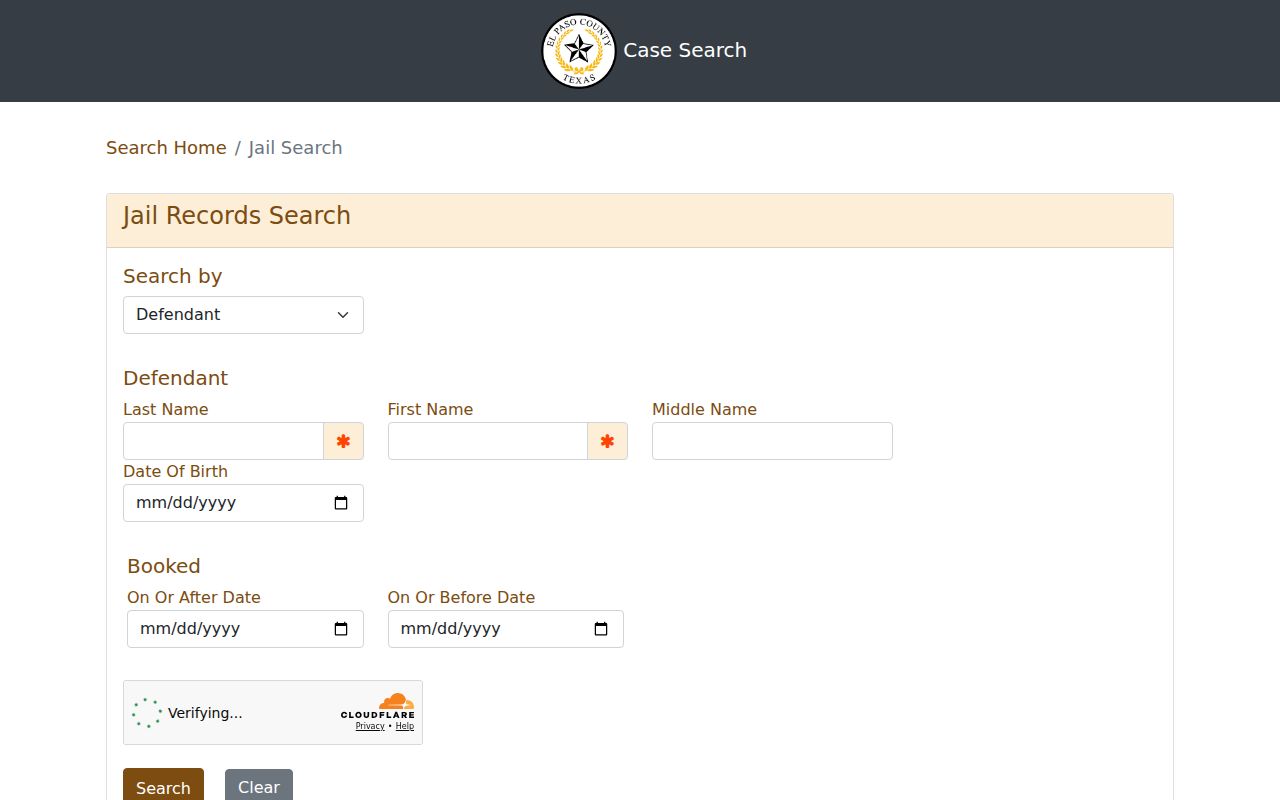
The form’s identity and booking-date fields support a current check, while a historical booking-out answer still requires the remaining sequence.
El Paso Released or Still in Custody
Each official system answers only within its jurisdiction. A county no-match cannot prove state, federal, or immigration status. A projected date cannot prove completed release. Compare both the population covered and the returned field before treating a result as confirmation.
| Channel | Best use | Release limit |
|---|---|---|
| EPCSO Jail Records | Current adult county custody | Current jailings only; no released archive |
| County release record | Actual EPCSO booking-out event and destination | Must be requested when not public online |
| Jail Bond Records and criminal docket | Bond mechanism, order, disposition, sentence | Do not supply the jail-door time alone |
| TDCJ Offender Information | Texas prison or state-jail status and history | Projected or scheduled dates may change |
| IVSS-Counties | Custody or supervision events and alerts | Not an official record; former custody may vanish |
| BOP Locator | Federal incarceration and post-1982 release history | BOP exit does not exclude other authority |
| ICE ODLS | ICE custody and roughly 60-day booked-out coverage | No-result is inconclusive; children are excluded |
TDCJ Search for El Paso Released Inmates
Use TDCJ Offender Information when an El Paso County defendant entered a Texas prison or state-jail unit. It is not an archive of every county booking. Prefer the seven-digit TDCJ number or SID number. Otherwise match exact name with birth date or approximate age and county. Open the detail and compare several identifiers.
| Search or result field | How to use it |
|---|---|
| TDCJ or SID number | Strongest search key when known |
| Name, birth date, age, county | Fallback identity combination |
| Location and status | Shows current state-system position |
| Offense, county, court, sentence | Confirms the correct incarceration record |
| Projected release | Calculation if parole does not occur sooner, not proof of exit |
| Scheduled date and location | Later processing information that can still change |
| Past status and history | Supports a completed parole, supervision, or discharge interpretation |
TDCJ’s free email fallback can provide the TDCJ number, location, present and prior incarceration offenses and counties or courts, and projected date when adequate identifiers are supplied. It expressly does not provide photographs. Classification and Records can address appropriate record questions at 936-437-6231 or classify@tdcj.texas.gov.
Open the official TDCJ search screen to see the statewide entry point.
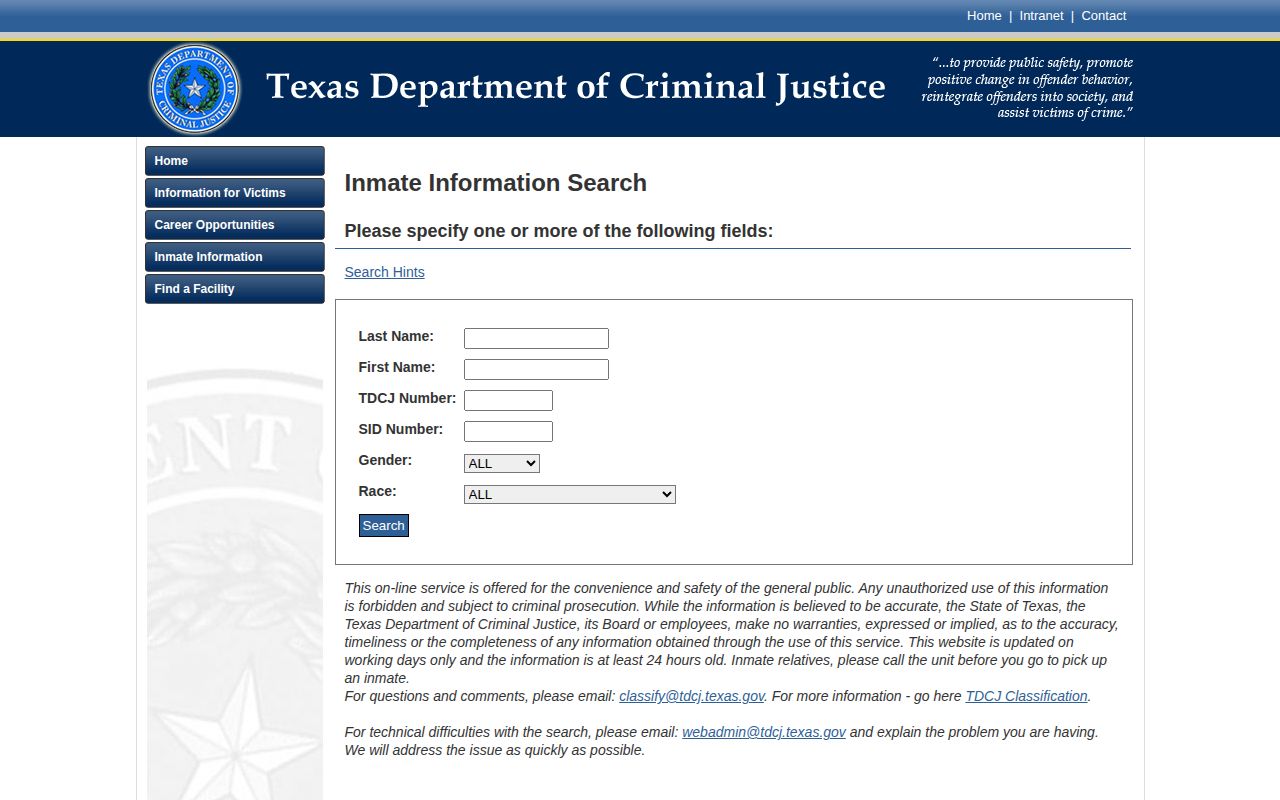
The statewide fields apply to TDCJ custody and release history, not a former EPCSO detainee who never received a state sentence.
El Paso Jail and Court Records Interlock
DDF contains two Jail Magistrate Courts plus Warrants, Bond and Inmate Trust, and Criminal Justice Coordination functions. That physical and administrative arrangement explains why El Paso’s separate jail, bond, warrant, and court searches describe different parts of one custody transition. The jail record supplies the booking-out event. Bond data supplies a mechanism. The criminal docket supplies orders, disposition, judgment, sentence, probation, and dismissal events.
A dismissal can coexist with another case or detainer. A posted bond can coexist with a warrant or processing delay. A court order can authorize release without recording the precise time staff completed booking-out. Treat agreement among the sources as corroboration and preserve any unresolved difference rather than forcing one screen to answer every question.
See the official El Paso Criminal Case search used for the durable case trail.
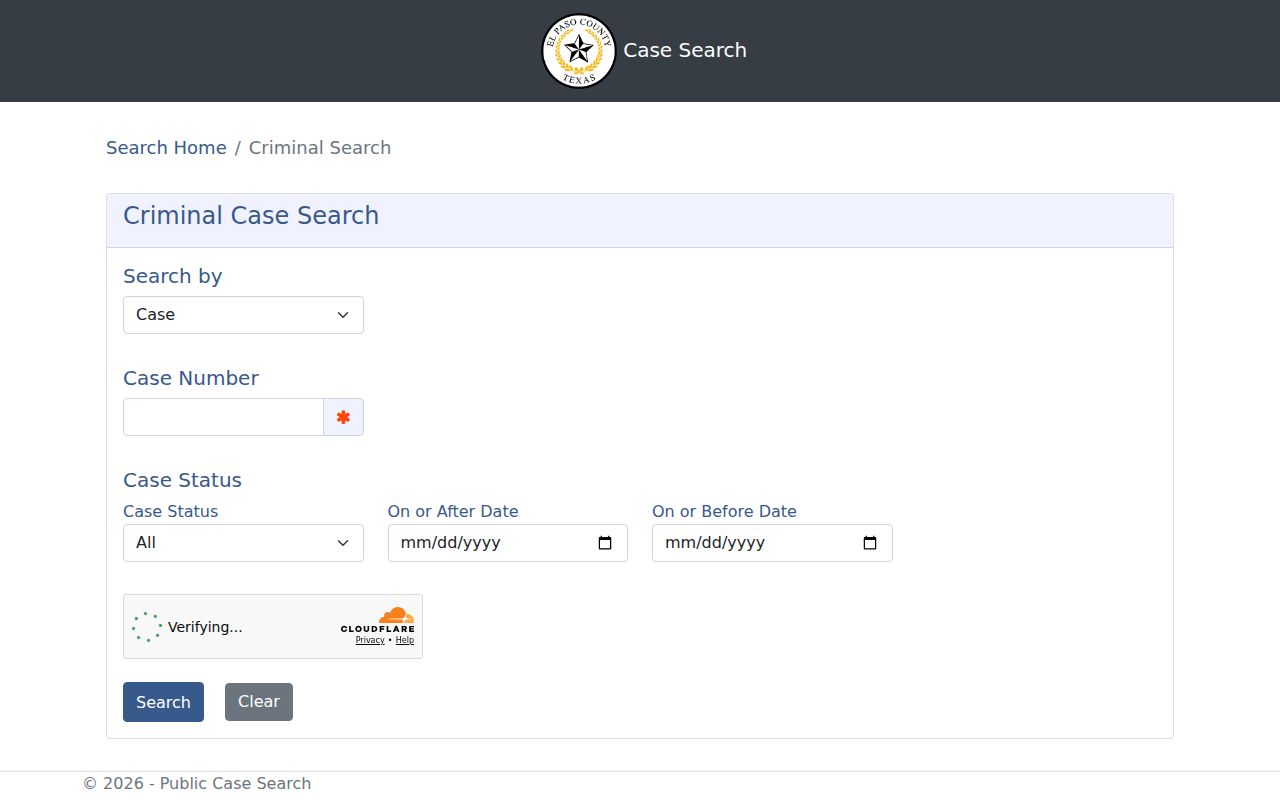
The case portal continues to matter after the live jail result changes because court history and the jail’s physical release event are related but distinct.
El Paso County Release-Day Logistics
DDF publishes a dedicated Releasing line at 915-273-3768, while the Detention Bureau works around the clock on intake and release processes. The official pages do not publish an adult exit gate, a standard public release hour, a family waiting area, a bus stop, rideshare instructions, or a general adult property procedure. Call before traveling and ask staff for current directions.
TDCJ releases at Rogelio Sanchez Unit follow a different system. TDCJ generally conducts state releases from 8 a.m. to 5 p.m., Monday through Friday excluding holidays, subject to change. Family should call before travel. Do not apply that weekday state schedule to DDF or Annex.
El Paso Bond-Out Is Not Exit Proof
El Paso publishes a separate Jail Bond Records search with name, date of birth, bond status, and posted-date filters. A posted bond explains a legal release mechanism. It does not show the physical booking-out timestamp and does not resolve another case, warrant, detainer, or administrative processing.
Assignment to county Pretrial Supervision can corroborate a court-authorized community release. That unit supervises misdemeanor and felony defendants granted conditional release until adjudication. Its role differs from TDCJ parole and county probation. Join the bond entry and supervision status to the EPCSO release event rather than treating either as standalone proof.
El Paso County Release Activity
The 2025 EPCSO annual report gives local scale without creating a person-search list. DDF recorded 20,352 bookings and 13,960 releases during 2025, compared with 21,412 bookings and 17,131 releases in 2024. The Annex recorded 6,287 releases in 2025 and 4,597 in 2024.
These are facility operational events, not necessarily unique people. They do not reveal which exits reached the community, which became transfers, or who left on a given day. Use them as context for county turnover, never as a substitute for a named-person record.
El Paso County Release to ICE
An ICE detainer can turn the end of county authority into a transfer to federal immigration custody. ICE describes a detainer as notice and a request concerning an impending release so it can assume custody. Accordingly, “released by EPCSO” can accurately mean booked out to ICE rather than released into the community.
This distinction is especially local. El Paso has ICE facilities, DDF handles federal arrestees, and the Annex stopped holding federal inmates in May 2024. Search ICE ODLS by nine-digit A-number and country of birth, or exact name and country with optional birth date. ODLS can show “not in custody” for a person booked out within roughly 60 days. A mere no-result is not proof because timing, matching, exclusions, or delay may apply.
Review the official ICE detainer explanation when a county destination indicates immigration custody.
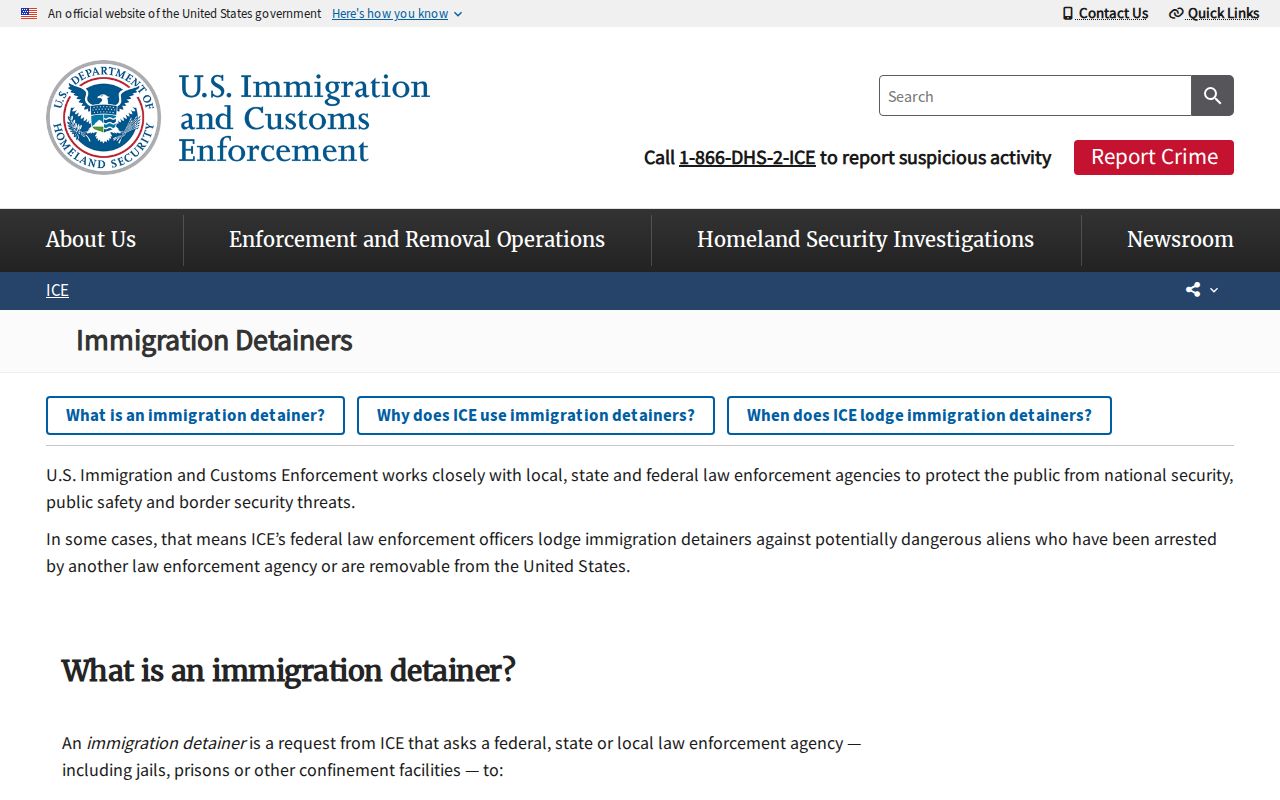
The source shows why the end of an EPCSO hold and the start of ICE custody can be parts of the same movement.
Release Alerts and Federal Lookups
Texas IVSS-Counties replaced the county VINE workflow on September 1, 2025. It searches by full or partial name and identifiers such as DOC ID, SID, jail ID, or permanent booking number, then supports subscribed custody and court events. The portal warns that former-custody people may not appear and that its information is not an official record. TDCJ IVSS separately covers state custody and parole notifications.
BOP Locator covers federal imprisonment, primarily people held or released since 1982. A past date and “Released” location mean the person left BOP custody, not that state, immigration, or supervised-release authority ended. USMS has no public historical released-person locator identified here; use the federal docket for detention or release orders and appropriately described FOIA requests. ICE ODLS covers its own limited population. Jurisdiction is the first filter.
El Paso Reentry After County Release
EPCSO and County Criminal Justice Coordination publish Jail Annex resource information, classes, and care management for named groups of justice-involved participants. Some GED or ESL participation may continue after release. County planning also described direct transport of some people without stable shelter from jail to Rescue Mission. These are documented navigation points, not benefits promised to every released person.
El Paso Promise is a narrower Criminal Justice Coordination referral path for qualifying justice-involved young adults ages 17 through 28 under published offense criteria. Eligibility must be confirmed by the program. County pretrial supervision, CSCD probation, TDCJ parole, and a residential reentry center remain distinct forms of oversight or placement.
Release IDs and Property in El Paso
Property rules depend on the facility. The El Paso County Juvenile Detention Center specifically warns that personal property remaining more than 30 days after release is forfeited without notification. That rule applies to the juvenile center and must not be generalized to adult EPCSO property. The research located no general adult inmate-property-at-release procedure on the official DDF or Annex pages.
For state releases, TDCJ reentry may help eligible people obtain a replacement Social Security card, certified birth certificate, and state identification. That state support is not an EPCSO promise. Contact the facility or responsible reentry office for the person’s actual route before assuming a document or property service applies.
Release Money Applies to TDCJ Only
TDCJ guidance describes release money based on state release type: $50 at parole or mandatory-supervision release plus $50 after reporting, and $100 at flat discharge. Texas Government Code Section 501.015(b) excludes state-jail inmates from release money. These are state-system rules and must not be promised to someone leaving DDF or the Annex.
The distinction follows the custodian. Rogelio Sanchez Unit is a TDCJ unit, but its population includes state-jail custody categories, so the statutory exclusion matters. An EPCSO release has no corresponding payment documented in the El Paso research. Ask the responsible agency about the specific person and release type.
El Paso County Release Facilities
Eight facilities in or serving El Paso County require different release paths. The DDF and Annex are adult EPCSO jails. The Juvenile Detention Center uses restricted authorized-person routes. Sanchez Unit is a TDCJ state institution. The two Horizon Boulevard centers are supervised residential reentry placements. El Paso Service Processing Center and DOW at Fort Bliss are ICE facilities.
| Facility | Correct release route |
|---|---|
| El Paso County Downtown Detention Facility | DDF Releasing, EPCSO record, bond and court file |
| El Paso County Jail Annex | Same county ecosystem; identify transfer destination |
| El Paso County Juvenile Detention Center | Authorized juvenile record request, not adult search |
| Rogelio Sanchez Unit | TDCJ Offender Information and Parole Division |
| CoreCivic El Paso Multi-Use Facility North | TDCJ status plus responsible parole office |
| El Paso Transitional Center South | TDCJ status plus responsible parole office |
| El Paso Service Processing Center | ICE ODLS and ERO El Paso |
| DOW Detention Facility at Fort Bliss | ICE ODLS and responsible ERO channel |
A residential placement is release from prison but not unrestricted living. A county release to ICE is a transfer. A move between TDCJ units is not release. Matching the facility type to its record system is the most important safeguard in the El Paso County search.